strings before you reverse: spot hidden urls and secrets fast
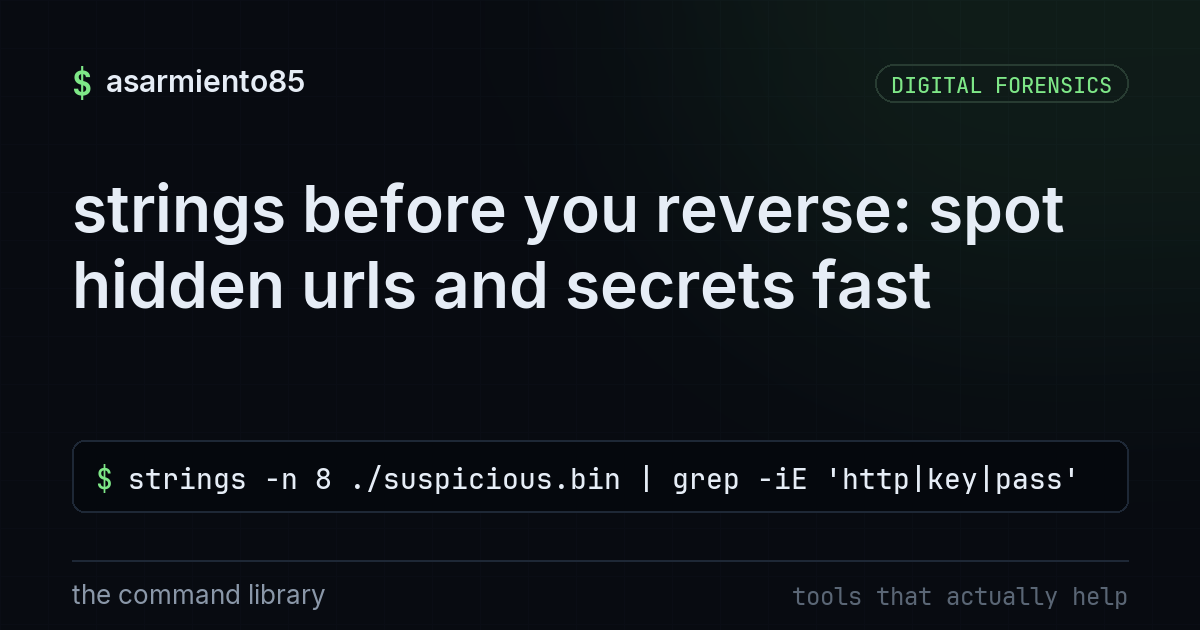
strings -n 8 ./suspicious.bin | grep -iE 'http|key|pass'before you fire up ghidra, just run strings
every time someone shows off a slick reverse engineering session, there's a step that gets skipped in the highlight reel: the boring, five second scan that tells you if you even need to reverse engineer anything at all. that step is strings. it's been sitting on your linux box this whole time, free, fast, and criminally underused.
the idea is simple. compiled binaries are mostly unreadable garbage to human eyes, but they still carry chunks of plain text inside them, urls, error messages, file paths, sometimes straight up api keys or hardcoded passwords that a dev forgot to strip out. strings pulls that readable text out for you without executing a single instruction of the file. no sandbox needed, no risk of detonating malware on your own machine, just text extraction.
breaking down the command
strings -n 8 ./suspicious.bin | grep -iE 'http|key|pass'let's take it apart piece by piece.
strings is the base command. it walks through the binary and prints out any sequence of printable characters it finds.
-n 8 sets the minimum length of a string to 8 characters. by default strings uses a length of 4, which means you get flooded with junk like short variable names and random ascii fragments. bumping it to 8 filters out most of the noise while still catching urls, domain names, and typical secret formats.
./suspicious.bin is just the file you're pointing at. could be a downloaded executable, a firmware dump, a sketchy attachment, whatever landed in your downloads folder and made you go "hm."
| grep -iE 'http|key|pass' pipes the output into grep. the -i makes it case insensitive so http, HTTP, and Http all match. the -E turns on extended regex so you can use the pipe character to search for multiple patterns at once. this filters the giant wall of strings output down to lines that actually mention urls, keys, or passwords, the stuff you actually care about.
why this matters for defenders
this isn't an offensive trick, it's triage. before you spend three hours in a disassembler, you want to know: does this thing phone home anywhere? does it have credentials baked in? is there a suspicious url pointing at a command and control server? strings answers a lot of that in seconds. it's the same reason incident responders run it on suspicious files during dfir work, it's cheap, fast, and gives you a first pass before committing real time to deep analysis.
run it on your own stuff too
here's the part that actually protects you. don't just run this on mystery files, run it on your own builds and your own binaries before you ship or deploy them.
strings -n 8 ./my_app | grep -iE 'http|key|pass|secret|token'you'd be surprised how often a hardcoded api key, a leftover debug password, or an internal staging url ends up compiled straight into a release build. developers hardcode things "temporarily" and then that binary ships to production, gets uploaded to a public repo, or gets analyzed by someone who runs the exact command above. if you find your own secrets sitting in plaintext inside a compiled binary, that's a finding you want to catch before an attacker does.
a couple of upgrades worth knowing
if you're on windows binaries or cross platform stuff, strings works on those too, just make sure you're using a build that handles both ascii and unicode strings, since windows loves utf-16 encoded text. add -e l for little endian 16 bit strings if you're missing output you expect to see.
also worth pairing strings with file ./suspicious.bin first, just to confirm what type of file you're actually dealing with before you go digging.
the takeaway
strings won't replace real reverse engineering, but it's the fastest gut check you have. run it on anything unfamiliar before you execute it, and run it on your own builds before you ship them. secrets hiding in plaintext inside a compiled file are an easy win for anyone who bothers to look, so make sure that anyone is you, not someone else.